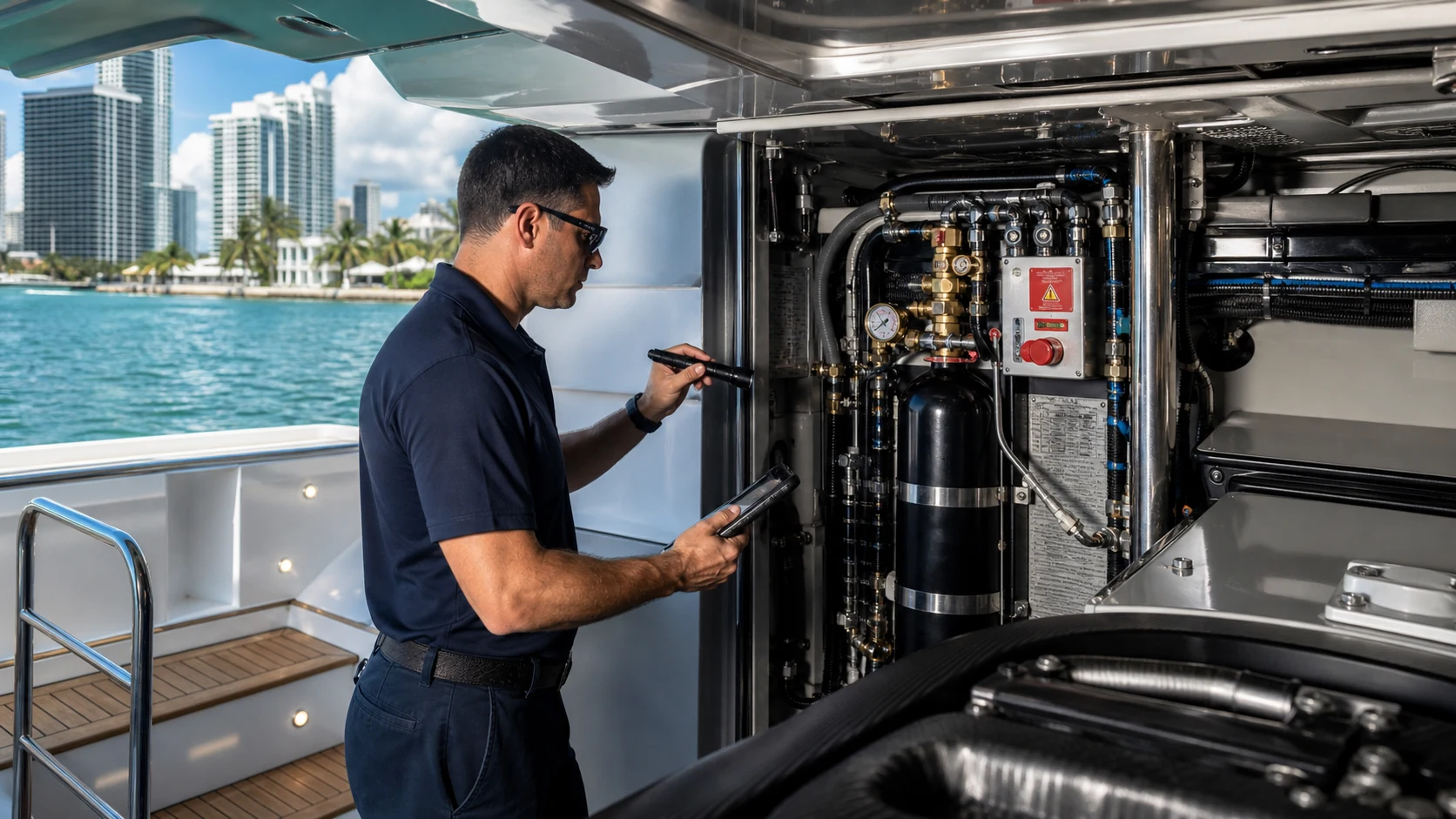
Commercial Vessel Fire Protection in Miami-Dade County
Miami Marine Fire Protection considers inspection requests for qualifying commercial vessels in Miami-Dade County. Vessel category, use, inspection status, installed systems and requested documentation must be reviewed before work is confirmed.
System And Portable Fire-Equipment Inspection Scope
Commercial service scope is not assumed from recreational-boat practices. A request should identify the vessel type, operating service, passenger or cargo use, protected machinery spaces, portable equipment and any authority or program involved.
Workboats, service craft and other commercial operations should be described by their actual use rather than grouped under a generic recreational request. That information helps establish whether the requested work is appropriate for the vessel.
Fixed engine-room and generator-room systems should be listed by protected space. Portable extinguishers should remain a separate equipment category, preventing a limited inspection record from being mistaken for a complete vessel evaluation.
Provide written findings or service instructions when available. Commercial programs may require specific inspections, tests, personnel or documentation, and no claim is made that every required service falls within the company’s available scope. Marine Fire Protection System inspections provide more information about inspection requests.
A commercial vessel’s operating details, installed equipment and requested documentation all shape the review. Miami Marine Fire Protection provides private fire-equipment service and does not represent the Coast Guard, a classification society or a flag-state authority.
Have vessel-specific information ready before requesting a commercial scope review.
Talk It ThroughSeparate Marine Fire Suppression Systems and Portable Equipment Records
A commercial vessel may have fixed fire suppression systems protecting machinery spaces alongside portable fire equipment used elsewhere aboard. These categories should be identified separately when a commercial service request is submitted.
Protected Machinery Spaces
Engine-room and generator-room systems should be listed by the protected space they serve. Installed system information helps define the requested inspection scope.
Portable Fire Equipment
Portable extinguishers are a separate equipment category. Their presence does not establish the inspection status of a marine fire protection system.
Vessel Use Matters
Passenger, cargo and specialized operations can affect the requested work. Describe the vessel’s actual operating service so the request can be reviewed on its own facts.
Clear Records Matter
Documentation should state the vessel, equipment inspected and work actually performed. It cannot guarantee approval or substitute for official records, tests or inspections outside that work.
Keeping marine fire suppression systems and portable equipment distinct helps avoid treating a limited record as a complete vessel evaluation. Include available findings or service instructions with the request.
Documentation for Qualifying Commercial Marine Service
Miami-Dade commercial service documentation should identify the vessel, equipment inspected and work actually performed. Commercial requests should also disclose the operating use, applicable program and requested documentation.
Written Findings
Written findings or service instructions can help clarify the vessel’s existing condition and the requested scope. Provide them when available.
Facility Access
Include the facility access details that apply to the vessel. Access information is part of reviewing whether the requested work can be considered.
Knowledgeable Vessel Contact
A knowledgeable vessel contact can explain the vessel’s use, equipment and documentation needs during the scope review.
Requested Deadlines
Share requested deadlines early, while recognizing that a requested date is not guaranteed.
Commercial documentation records the vessel, equipment inspected and work actually performed.
Not sure what information to include? Start with the vessel type, use, installed systems and requested documentation.
About Marine Fire Protection System InspectionsWhat to Share for a Commercial Vessel Request
A useful commercial vessel request begins with clear, vessel-specific details. The vessel category, operating service, passenger or cargo use, protected machinery spaces, portable equipment, inspection status and requested documentation all help establish an appropriate evaluation.
Vessel Category
Identify the vessel type and actual operating service. Workboats, service craft and other commercial vessels should not be grouped under a generic recreational request.
Installed Systems
List fixed engine-room and generator-room systems by protected space. Separate those systems from portable equipment when describing the vessel.
Inspection Status
Provide available written findings, service instructions or other information that explains the inspection status and requested work.
Documentation Needs
State what documentation is requested, while recognizing that private fire-equipment service cannot guarantee approval or substitute for official records, tests or inspections outside the work performed.
Commercial vessels in Miami-Dade County may have different operating models and equipment needs. Charter and passenger-vessel requests should use the dedicated charter boat fire-equipment inspections information when that model defines the need.
Why Commercial Scope Review Comes First
Commercial vessel fire protection requests require a vessel-specific review before work is confirmed. The vessel’s category, operating service, installed systems, equipment and documentation needs may all affect whether the requested work fits the available scope.
Early review helps avoid scheduling a service that does not match the vessel or requested program. Include the details that define the request rather than relying on a general description of the vessel.
Charter and passenger-vessel requests should use dedicated charter service information when that operating model defines the need. Other commercial vessels should still disclose whether passengers, cargo or specialized operations affect the requested work.
The company does not represent the Coast Guard, a classification society or a flag-state authority. Its commercial work is private fire-equipment service, and no official approval, certification or regulatory outcome is promised.
Provide deadlines, facility access and a knowledgeable vessel contact with the request. These details support a practical scope review, though a requested date is not guaranteed.
Marine Fire Protection Inspection Services
Miami Marine Fire Protection considers inspection requests involving marine fire suppression systems, engine-room and generator-room systems, portable fire equipment and vessel-specific documentation needs.
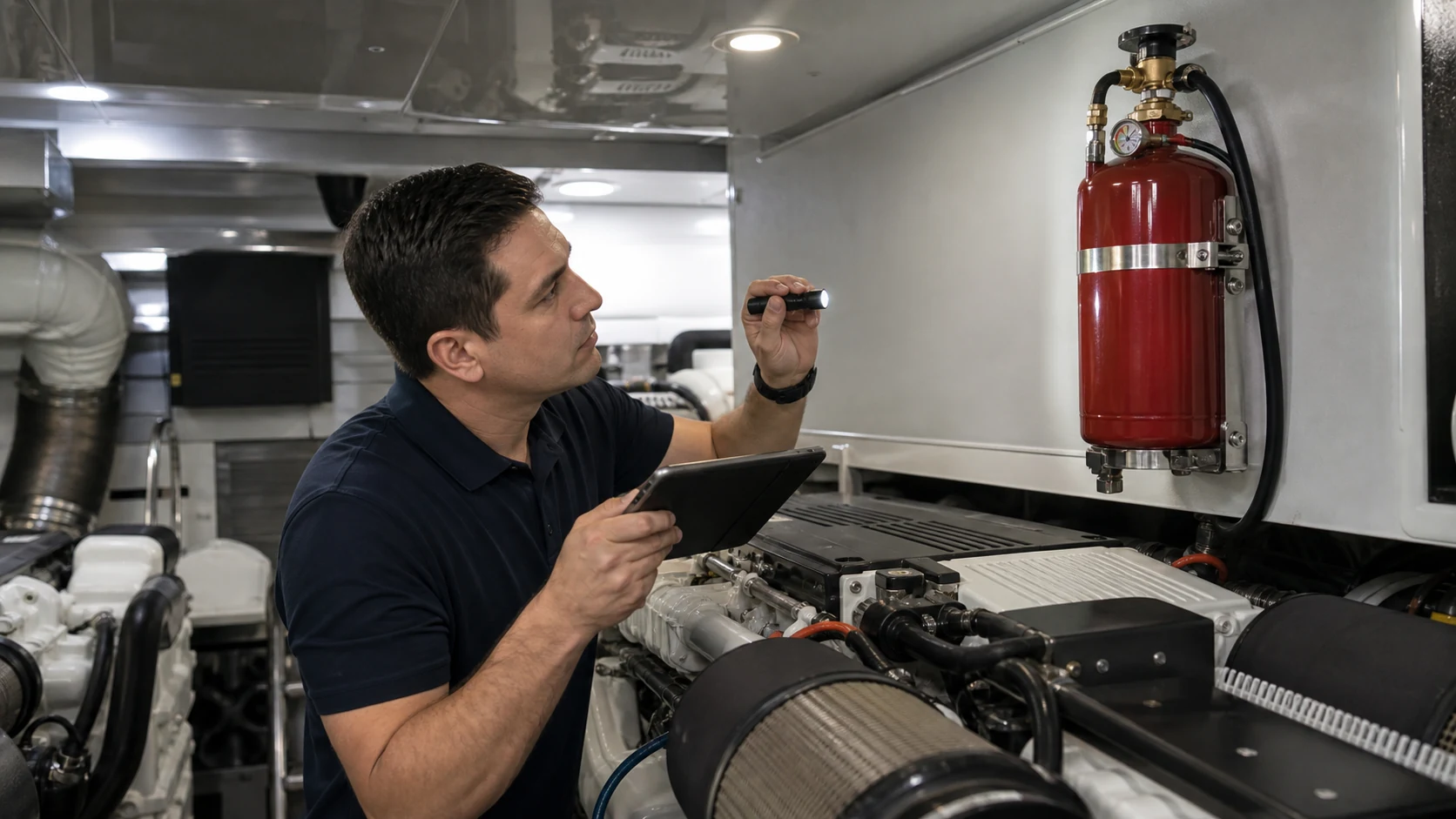
Marine Fire Protection System Inspections
Inspection requests for marine fire suppression systems are reviewed using the vessel and protected-space information provided.
View service →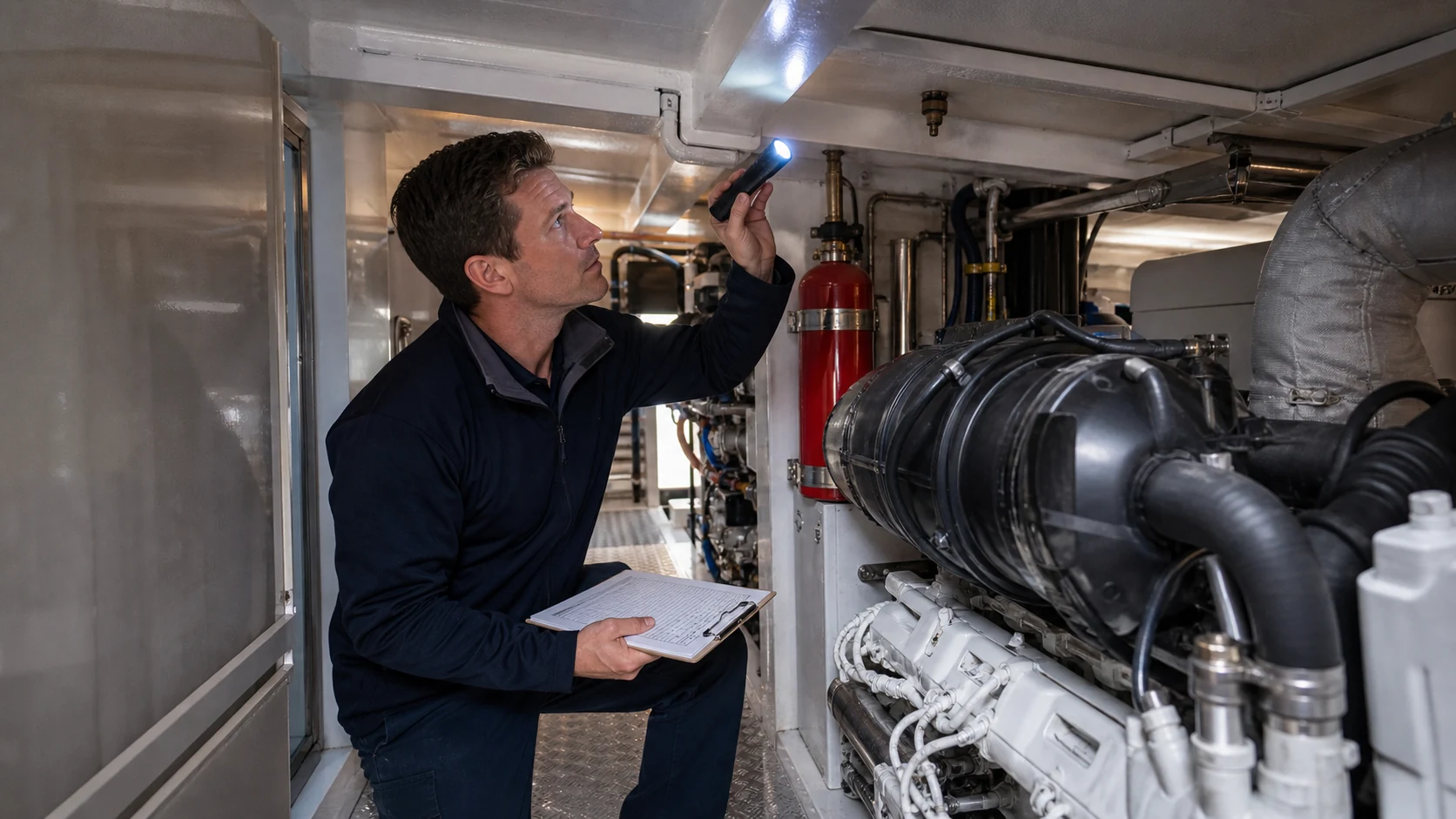
Engine-Room Systems
Engine-room fire suppression inspection requests should identify the protected machinery space and installed system details.
View service →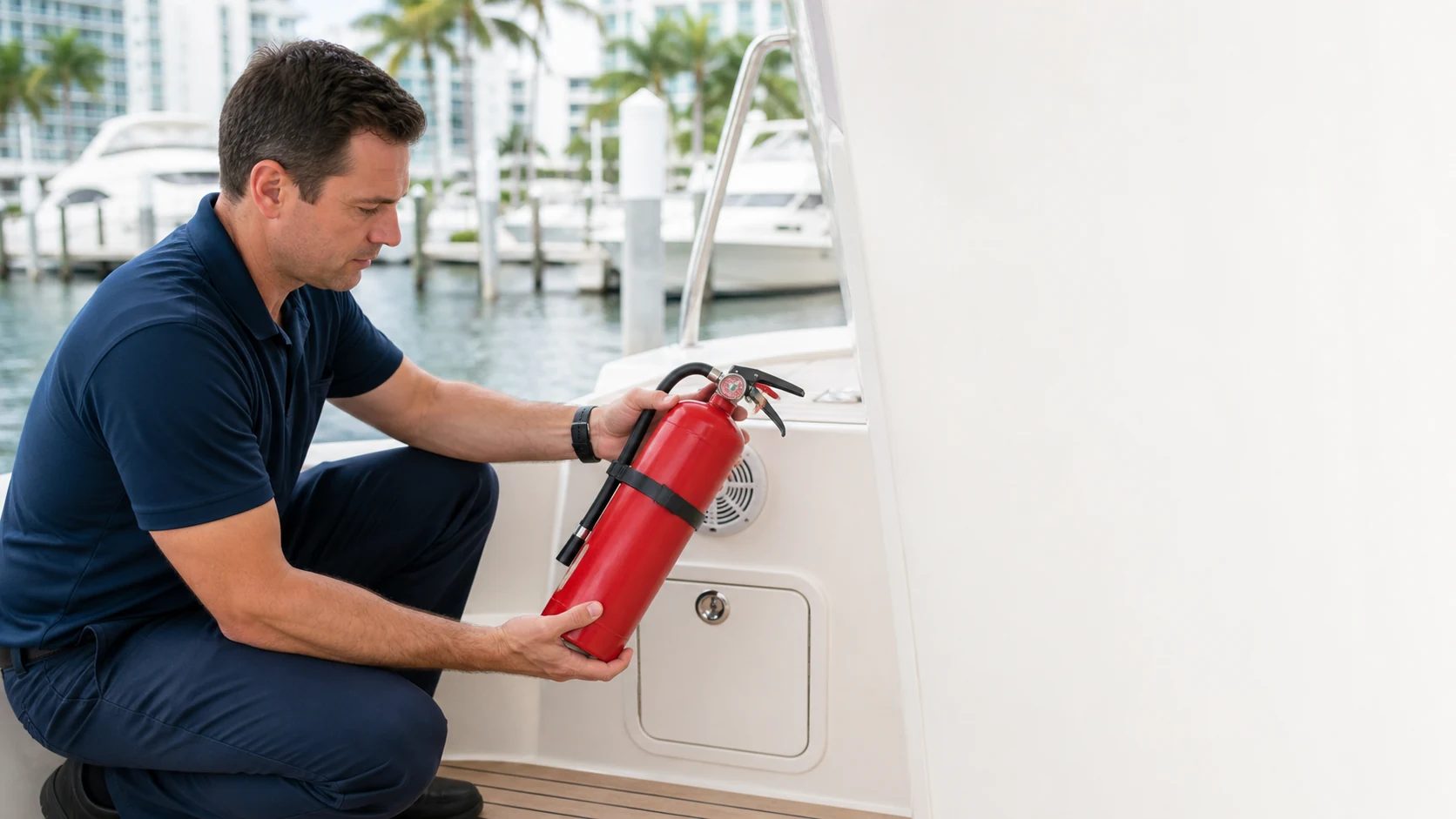
Generator-Room Systems
Generator-room fire suppression inspection requests should identify the protected space and available system information.
View service →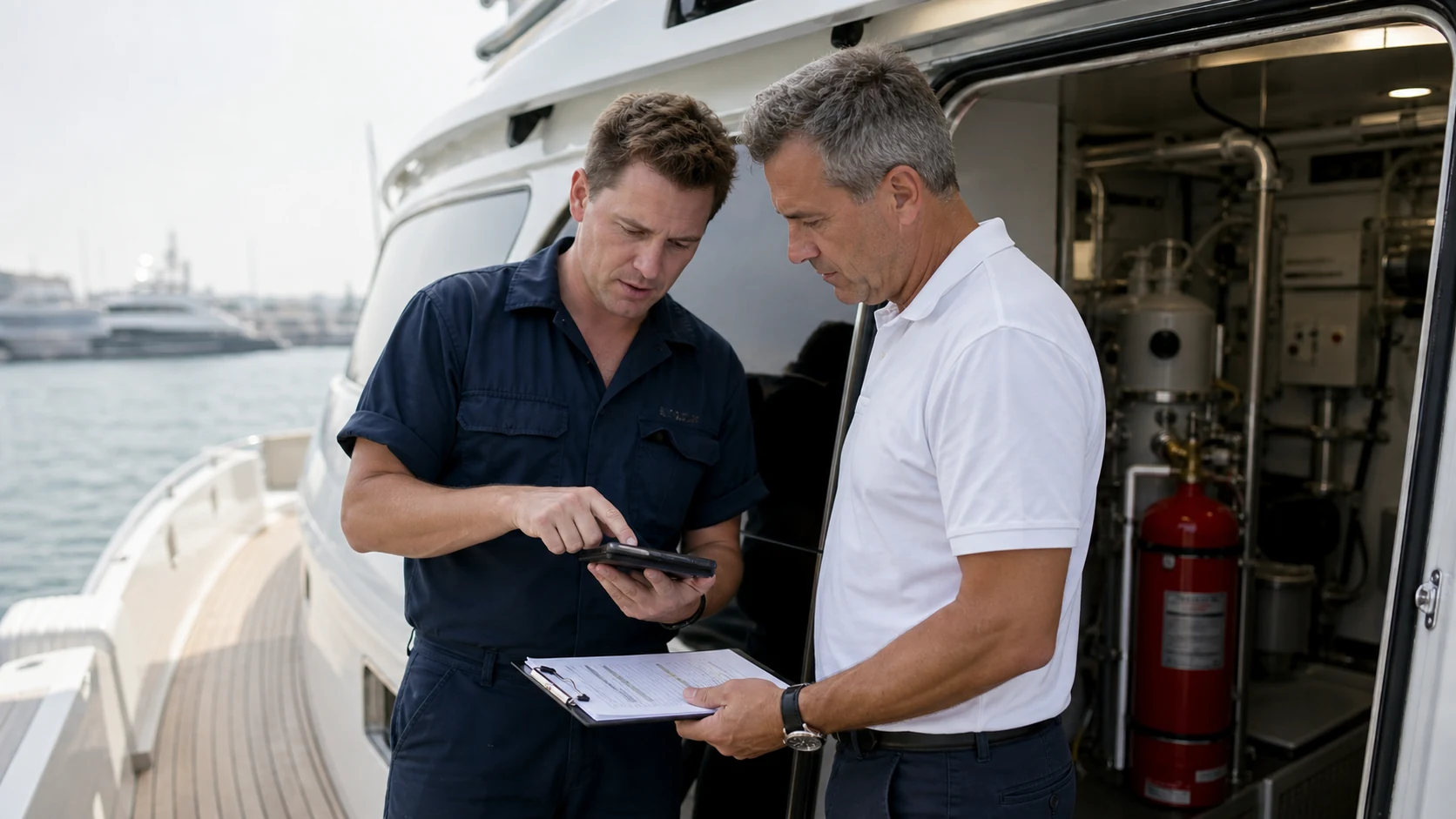
Marine Fire Extinguishers
Portable fire equipment remains a separate category within a commercial vessel’s overall fire-equipment request.
View service →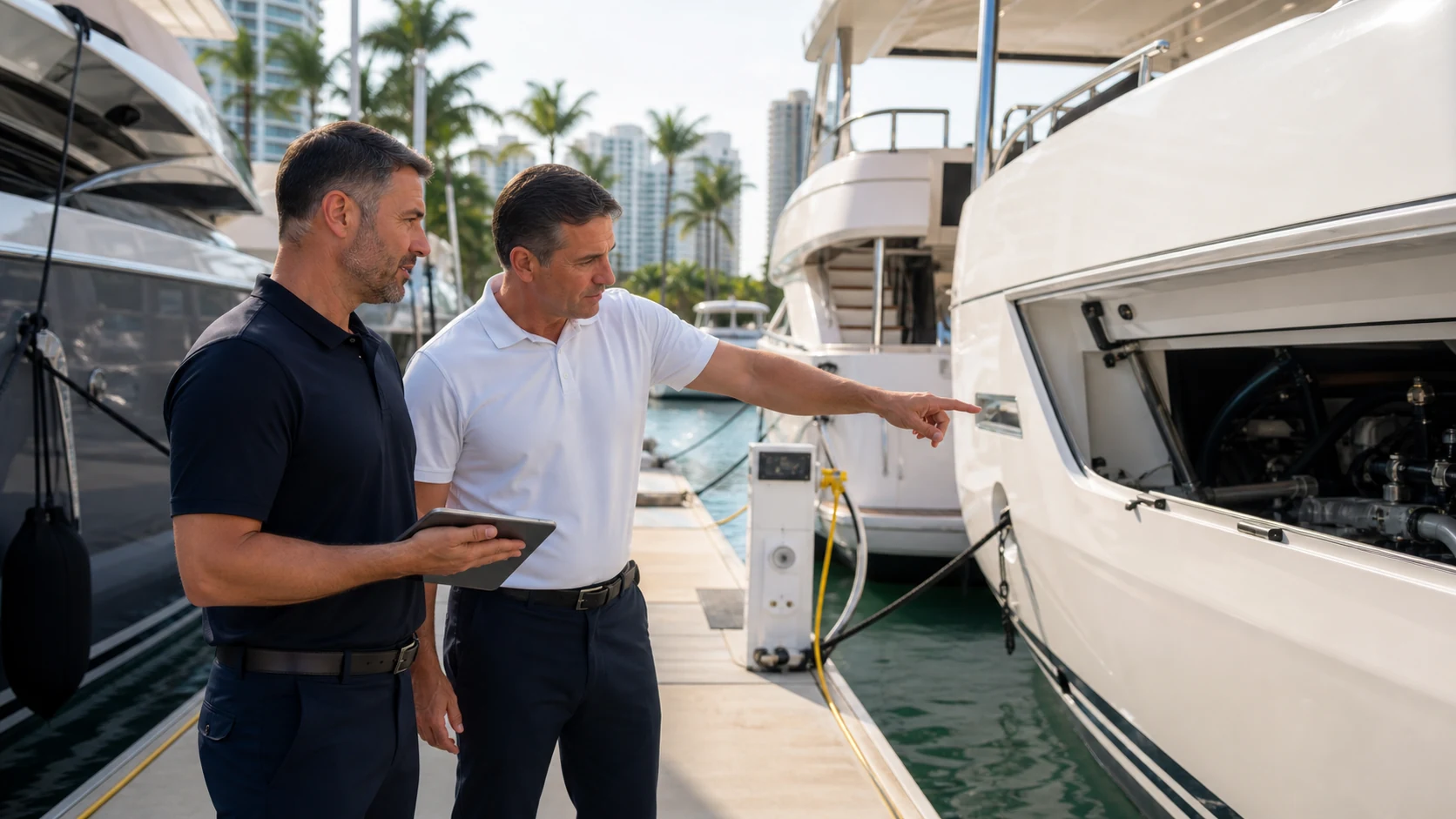
Deficiency Evaluation
Written findings or service instructions following a marine-survey or insurance deficiency can be included for scope evaluation.
View service →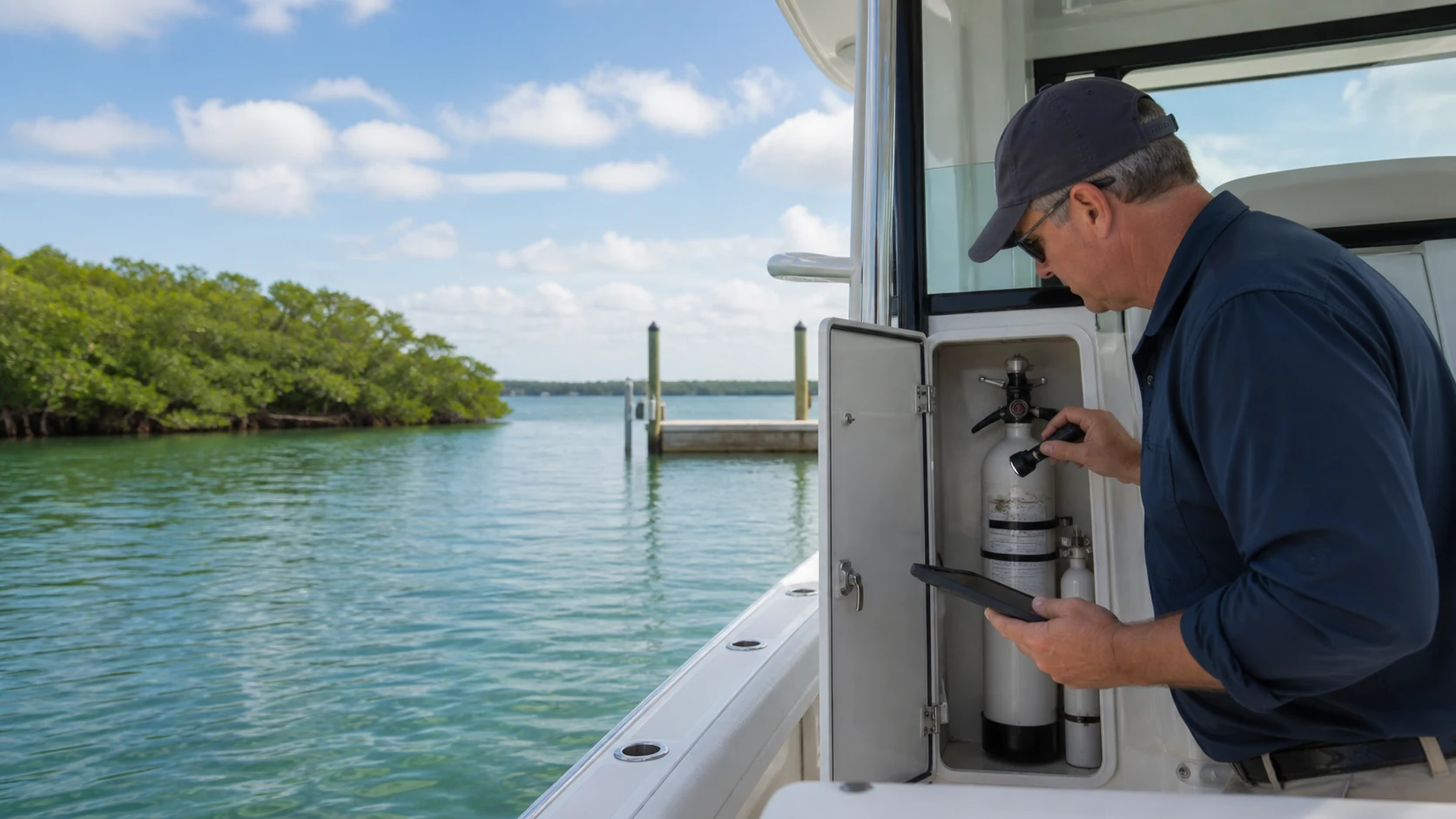
Insurance and Survey Requests
Vessel-specific fire-equipment inspection documentation may be requested following a marine survey or insurance deficiency.
View service →Commercial Vessel Fire Service FAQs
Miami Marine Fire Protection provides private fire-equipment service for qualifying commercial vessel requests in Miami-Dade County. Repair, recharge, installation, hydrostatic testing, class approval and official Coast Guard certification are not promised.
Start With the Vessel Details
Call with the vessel type, operating use, installed marine fire suppression systems, portable equipment and requested documentation. Miami Marine Fire Protection considers qualifying commercial vessel requests in Miami-Dade County.