Coordinated Yacht Fleet Fire Inspections in Miami-Dade County
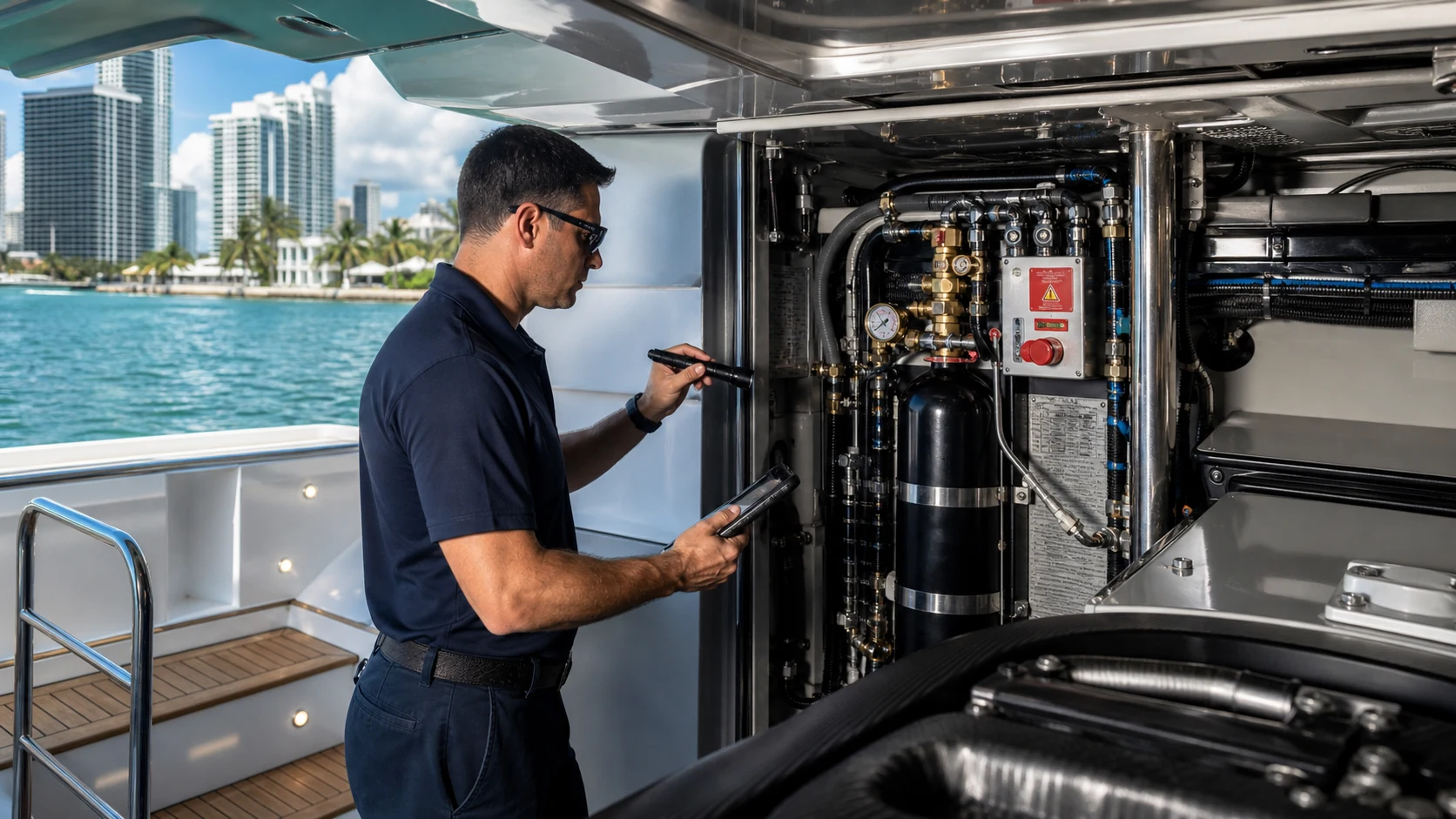
Miami Marine Fire Protection works with yacht managers who need to coordinate inspection requests for one or more Miami-Dade vessels. Fixed engine-room and generator-room systems are the primary focus, with portable extinguishers added when requested. Every yacht retains its own equipment scope and records even when appointments are grouped.
Organized Fire-Equipment Service and Records for Miami-Dade County Fleets
A Miami-Dade fleet request should include a vessel list with locations, lengths, authorized contacts, protected spaces, known system information and requested timeframes. Distinguish recurring inspections from survey findings, insurance requests and abnormal system conditions.
For each yacht, list engine-room, generator-room and portable equipment separately. Grouping requests may improve coordination, but it does not mean every system has the same service needs or that one inspection record applies across the fleet.
Each yacht should retain its own equipment scope and records. A vessel-specific approach helps managers coordinate managed-yacht requests while keeping system information clear for every vessel.
Identify vessels that will move between berths or leave the area. The service location should reflect where each yacht can actually be accessed. No response time or grouped-service availability is guaranteed.
When planning yacht engine-room system inspections, provide available system details and the protected spaces associated with each vessel. This supports a vessel-specific service evaluation before access arrangements are finalized.
Managing several Miami-Dade yachts? Start with a clear vessel list and access plan.
Discuss SchedulingMaintaining Clear Fire-Equipment Records for Each Yacht
Miami-Dade yacht managers should keep records tied to the correct vessel, cylinder, protected space and equipment category. Managers can track inspection dates and open concerns without presenting private service records as broader certifications.
The Vessel Record
Keep the yacht name, current location, authorized contact and applicable equipment information together so a request can be coordinated around the correct vessel.
Protected Spaces
List engine-room, generator-room and portable equipment separately. A system in one protected space should not be treated as the same scope as equipment elsewhere on the vessel.
Survey and Insurance Requests
Distinguish survey findings, insurance requests, recurring inspections and abnormal system conditions. Each can require a separate scope decision for the affected yacht.
Vessel-Specific Documentation
Centralized tracking is useful, but it should not erase vessel-specific information. A generator-room record for one yacht must not be attached to another vessel with a similar name or configuration.
A survey finding should remain separate from completed service documentation until applicable work has occurred. System differences may also require separate scope decisions within the same managed fleet.
Plan Access Around Each Managed Yacht
Fleet scheduling begins with where each yacht can actually be accessed. Include current berths, anticipated movement between berths, authorized contacts and requested timeframes in the vessel list.
Current Berth
Record the location where the vessel can be accessed rather than relying on a general fleet location.
Authorized Contact
Provide the contact authorized to coordinate access for each managed yacht.
Vessel Movement
Identify yachts expected to move between berths or leave the Miami-Dade area before the requested timeframe.
Requested Timeframe
Share the requested timeframe early, recognizing that no response time or grouped-service availability is guaranteed.
Clear access details support organized scheduling across managed vessels.
Before finalizing access arrangements, discuss the fleet schedule and vessel-specific information.
Request Managed-Vessel ServiceWhat to Include in a Yacht Fleet Inspection Request
A useful request identifies each yacht and separates the information that applies to that vessel. Managers can coordinate several requests while preserving clear records for marine fire suppression systems and portable equipment.
Vessel List
Include each yacht separately with its name, location, length and authorized contact.
Protected Spaces
Identify engine-room and generator-room spaces, along with portable equipment when it is requested.
Known System Information
Share available marine fire protection system details so the request can be considered on a vessel-specific basis.
Open Concerns
Note survey findings, insurance requests, recurring inspection needs or abnormal system conditions separately from completed documentation.
For yacht management fleet fire inspections in Miami-Dade County, managers can coordinate dock access and records across vessels while retaining a separate scope for every yacht.
Why Centralized Tracking Still Needs Vessel-Specific Details
Centralized tracking can help managers monitor inspection dates and open concerns across a fleet. Its value depends on keeping every record connected to the correct vessel, equipment category and protected space.
A generator-room record for one yacht should not be attached to another yacht with a similar name or configuration. The same care applies to cylinders, engine-room systems and portable equipment.
Completed service documentation should remain distinct from survey findings or insurance requests until applicable work has occurred. Clear separation helps avoid presenting private service records as broader certifications.
System differences within a managed fleet may require separate scope decisions. Grouped scheduling is a coordination method, not a statement that every yacht has the same equipment or service needs.
For scheduling across several Miami-Dade berths, call (305) 680-5778 before finalizing access arrangements.
Marine Fire Inspection Services for Managed Yachts
Miami Marine Fire Protection focuses on marine fire suppression system inspections, with vessel-specific coordination for yachts and managed fleets.
Marine Fire Protection System Inspections
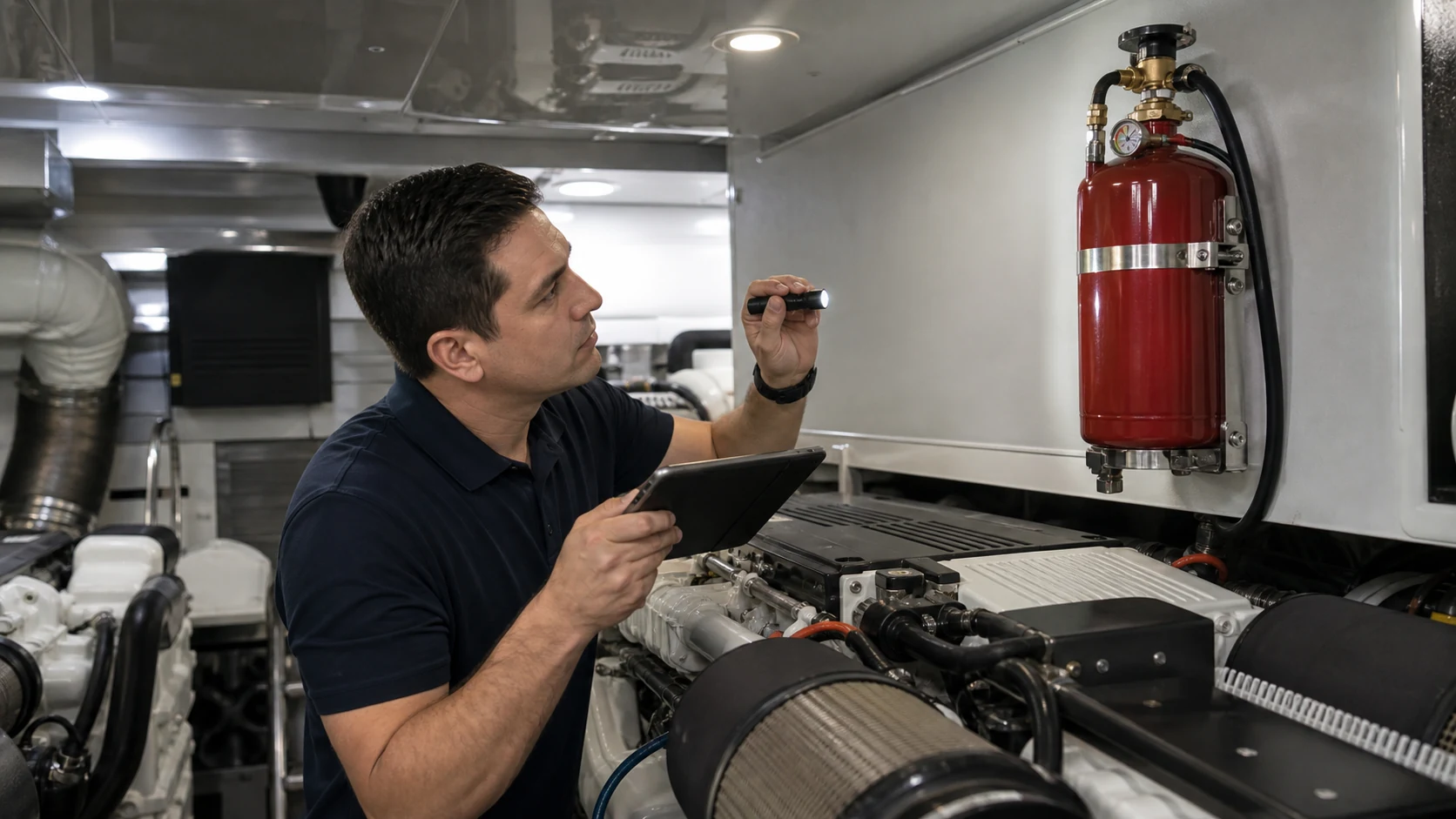
Inspection requests for marine fire suppression systems can be coordinated around the protected spaces and known system information for each yacht.
View service →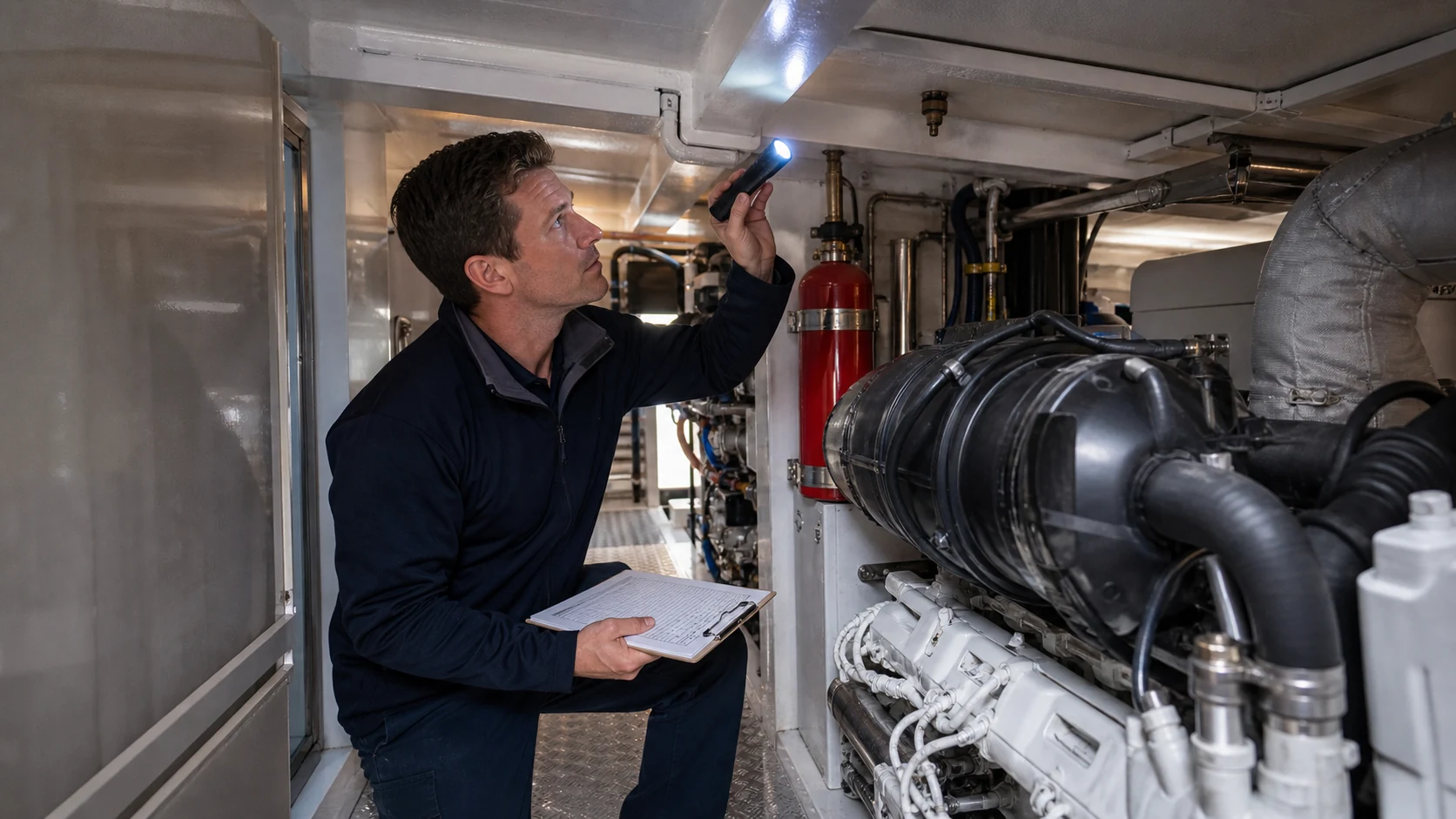
Yacht Engine-Room Inspections
Engine-room systems are a primary focus for yacht management fleet inspection requests.
View service →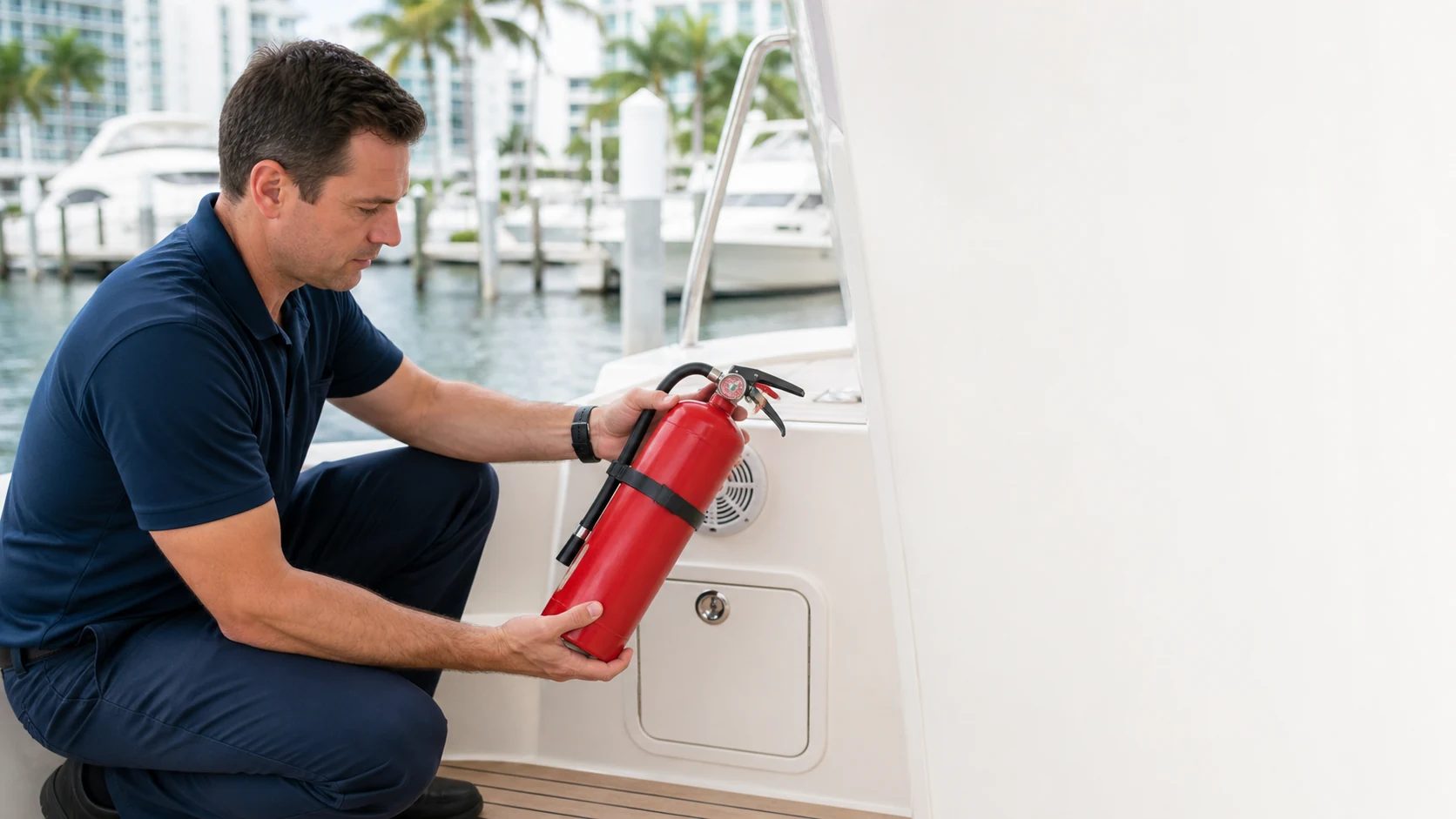
Generator-Room Inspections
Generator-room systems can be listed separately for a vessel-specific inspection scope and record.
View service →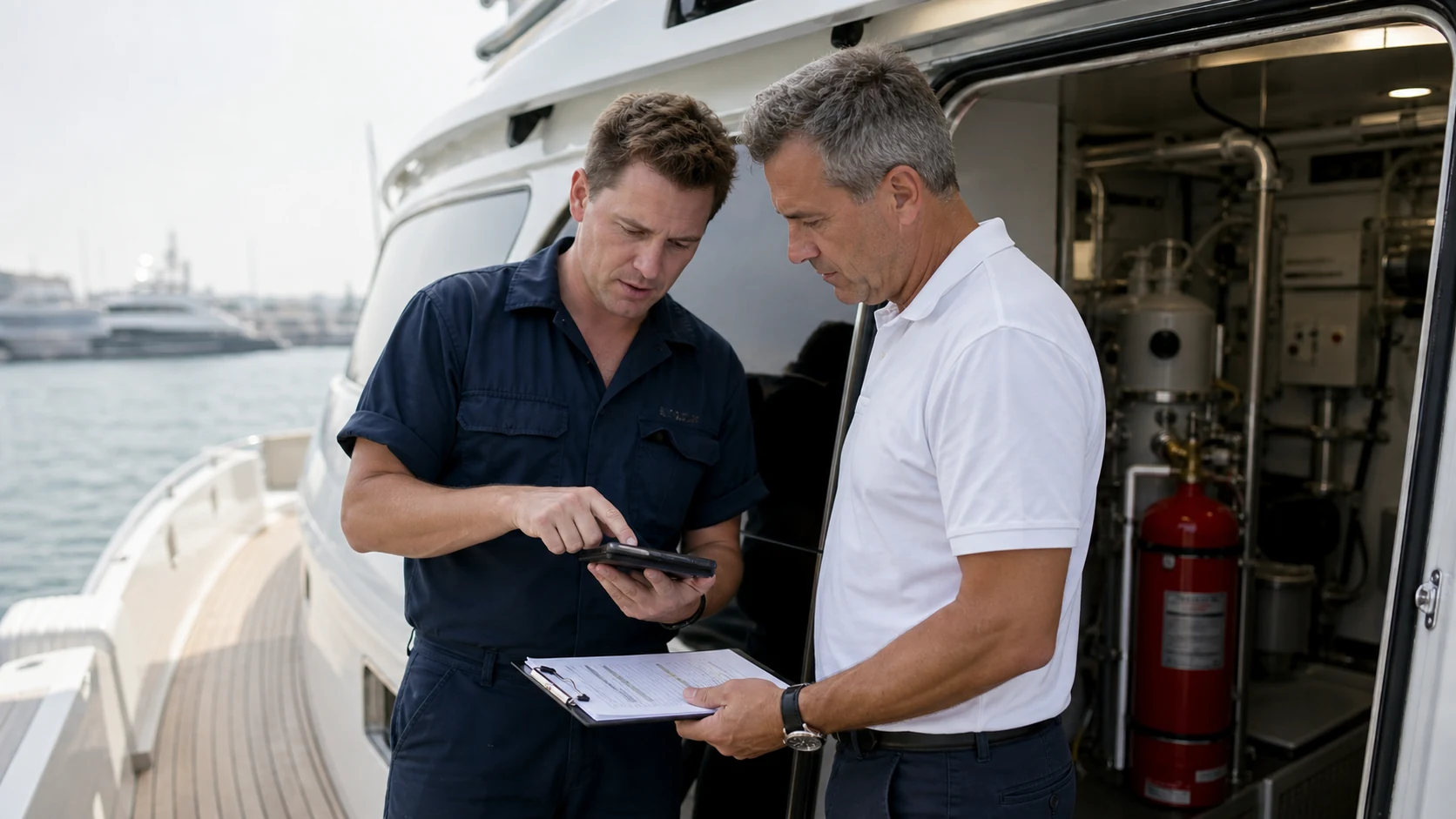
Marine Fire Extinguisher Inspections
Portable extinguishers can be added to a managed-yacht request when requested.
View service →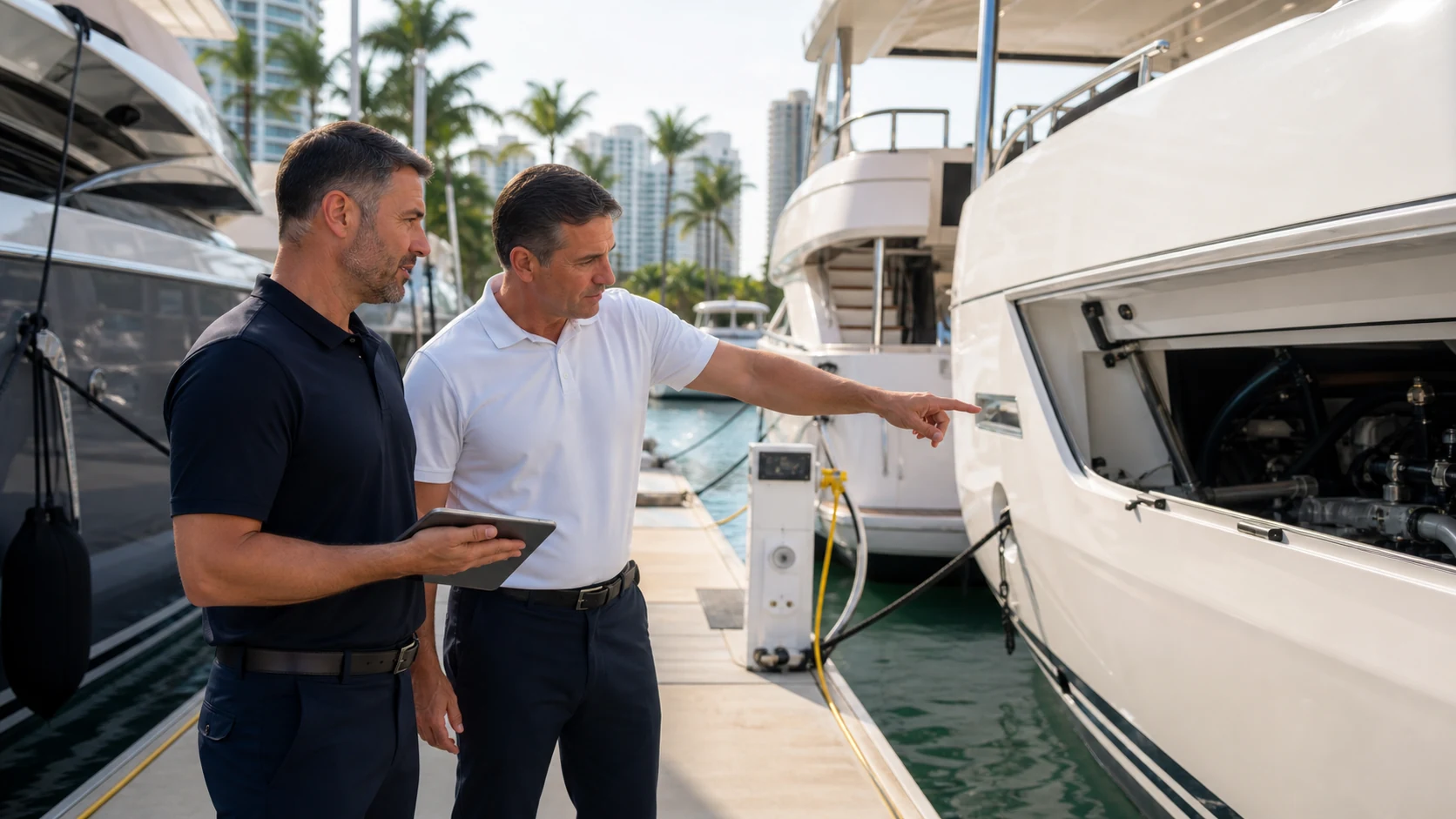
Insurance Fire-Equipment Inspections
Insurance requests should be distinguished from recurring inspections and other vessel-specific concerns.
View service →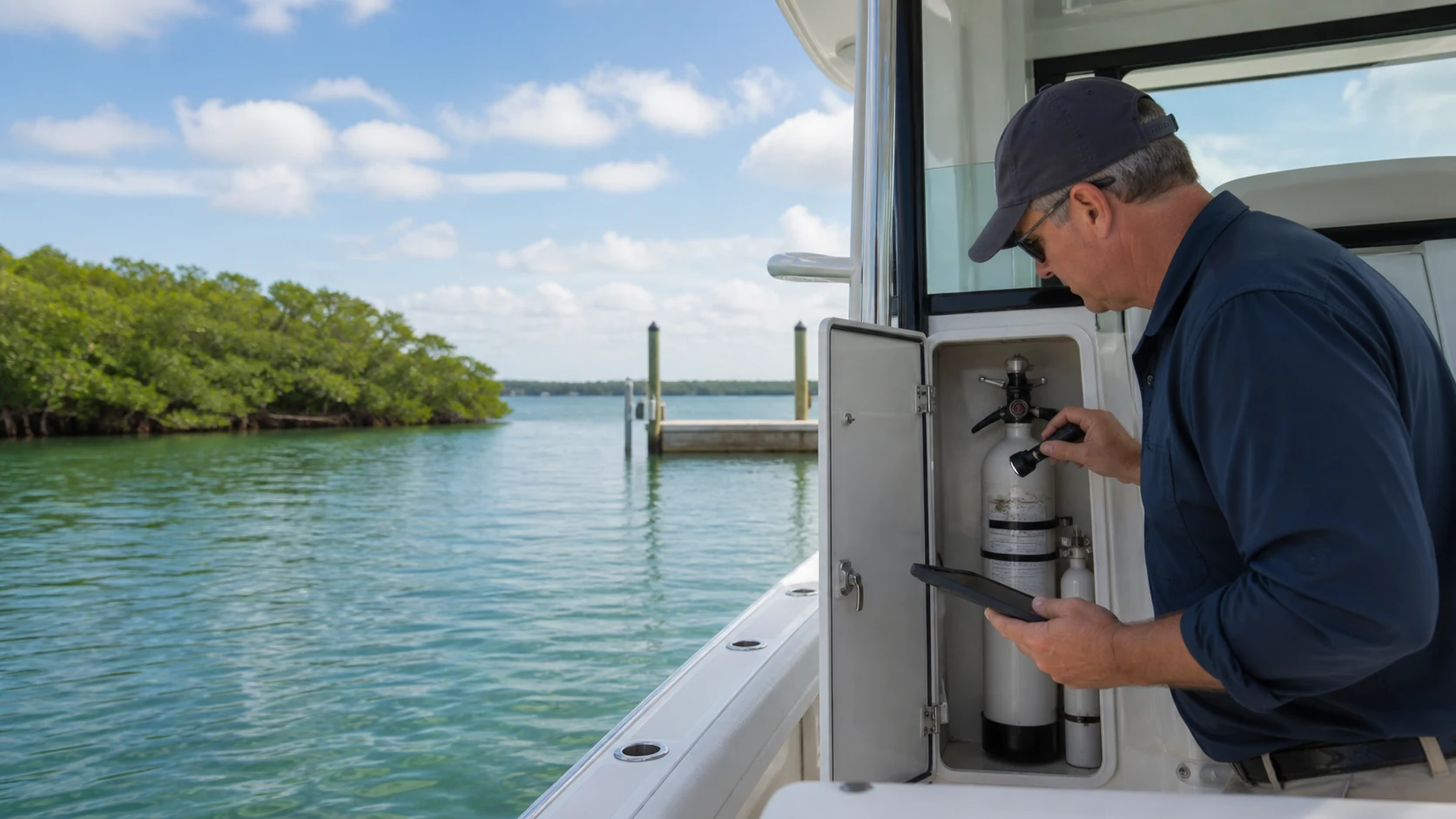
Pre-Survey Fire-Equipment Inspections
Survey findings remain separate from completed service documentation until applicable work has occurred.
View service →Yacht Management Fire Service FAQs
Miami Marine Fire Protection coordinates managed-yacht inspection requests in Miami-Dade County with vessel-specific scopes, dock access planning and organized records across managed vessels.
Coordinate Each Yacht Before Finalizing Access
Send a vessel list with locations, lengths, authorized contacts, protected spaces, known system information and requested timeframes. Miami Marine Fire Protection can discuss managed-fleet scheduling for Miami-Dade vessels.